Free Trade Port Policy

Navigating Residence Permits in Hainan: A Foreign Resident's Practical Guide from Personal Experience
2026-06-04
By Donnie Carlo
When I first arrived in Hainan three years ago, I imagined the biggest challenges would be the tropical heat or finding familiar food. I never expected that understanding the residence permit system would become one of the most complex — and ultimately rewarding — learning experiences of my time here.
This article shares my personal journey navigating visa transitions and residence permits in Hainan, including practical lessons that I wish someone had told me before I started.
From Tourist to Resident: My First Big Mistake
Like many foreigners, I initially entered Hainan on a standard tourist visa (L visa). When I decided to stay longer to explore business opportunities in the Hainan Free Trade Port, I assumed extending my tourist visa repeatedly was a reasonable strategy. It was not.
After two consecutive extensions, the entry-exit bureau officer politely but firmly advised me that repeated short-term extensions without a clear residential purpose could raise compliance flags. I had been unknowingly walking a legal tightrope.
That conversation was a turning point. I immediately sought advice from a local legal consultant who specialized in foreign affairs — and it changed everything.
Understanding the Right Visa Category
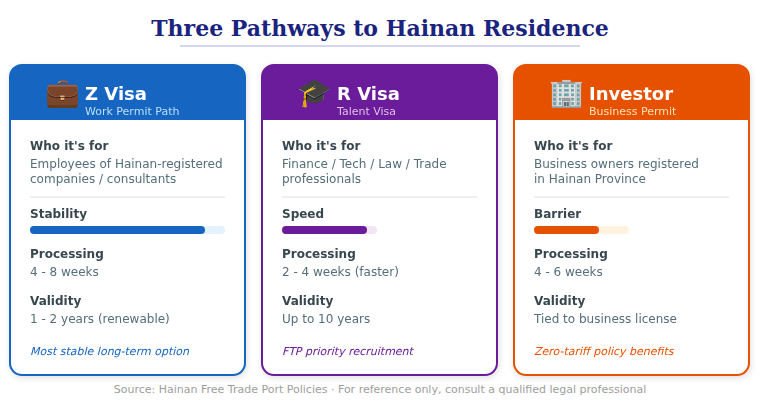
Through proper legal guidance, I learned that Hainan offers several residence pathways particularly relevant to foreigners engaged in economic activity:
Work Permit + Residence Permit (Z Visa Pathway) — If you are employed by a registered company in Hainan, the Z visa leading to a Work-Type Residence Permit is the most stable route. My legal advisor helped me understand that even part-time or consulting arrangements with a Hainan-registered entity can qualify, provided contracts are properly documented.
Talent Visa (R Visa) — Hainan actively recruits foreign talent under its Free Trade Port policies. Professionals in fields like finance, technology, law, and trade may qualify for the R visa, which offers faster processing and longer validity. I met several foreign professionals in Haikou who had successfully applied through this route.
Investor Residence Permit — For those establishing businesses in Hainan, an investor residence permit is available. The key requirement is that your business must be registered within Hainan Province — not just mainland China — and meet minimum registered capital thresholds.
The Documentation Reality Nobody Warns You About
Here is the practical reality: the documents required are straightforward in theory but demanding in practice, especially for foreigners whose home-country records are in another language.
For my Work-Type Residence Permit, I needed:
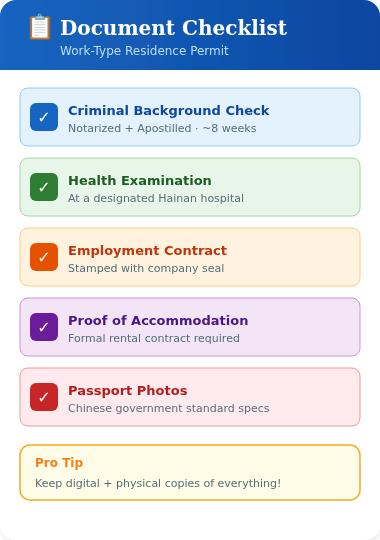
The criminal background check was the most time-consuming step. My home country's process took nearly eight weeks. I recommend beginning this process before you even arrive in Hainan if you know you intend to stay long-term.
A Turning Point: The Hainan Free Trade Port Advantage
What surprised me most was how genuinely streamlined the process has become under the Free Trade Port policies. Compared to experiences shared by foreign friends living in other Chinese cities, Hainan's entry-exit bureaus — particularly in Haikou and Sanya — have notably improved processing times and English-language support.
The Haikou Entry-Exit Administration Bureau now offers dedicated windows for foreigners, and in my experience, staff members were patient and willing to use translation apps to bridge communication gaps. The online pre-appointment system also significantly reduced waiting times.
Additionally, Hainan's "Zero Tariff" policy and simplified market entry rules have made it easier for foreigners to establish legal business entities, which in turn makes qualifying for investor or work residence permits more accessible than in many other provinces.
Practical Tips From My Experience
Based on my three years of navigating this system, here is what I would tell any newcomer:
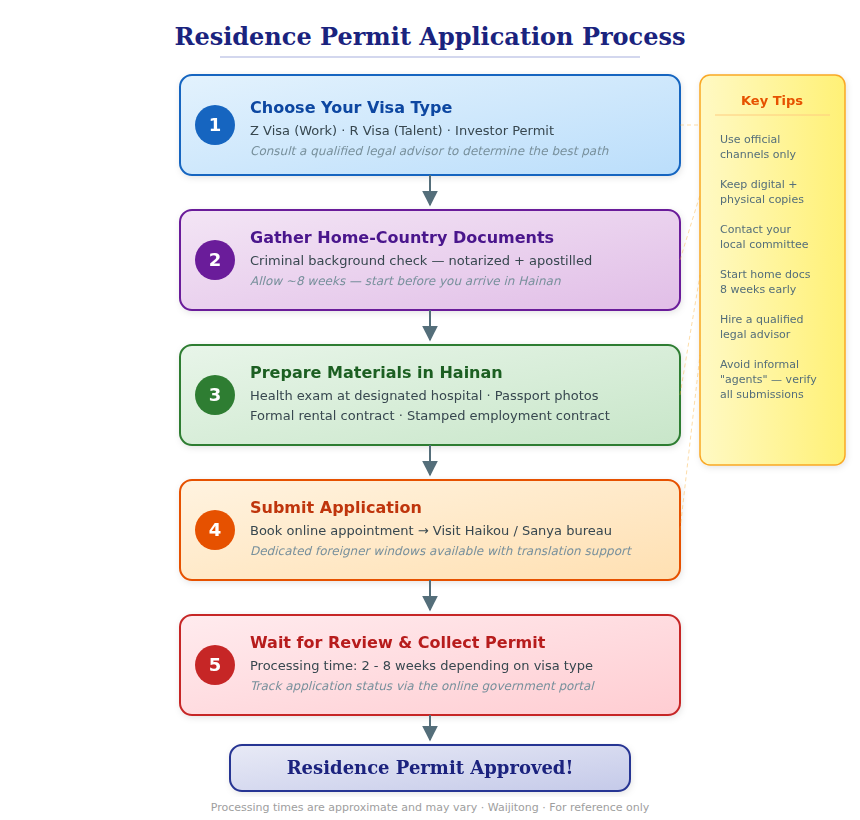
Never rely on tourist visa extensions as a long-term strategy. Clarify your purpose for staying early and choose the appropriate visa category.
Hire a qualified legal consultant for your first permit application. The cost is modest and the peace of mind is significant. Errors in initial applications can cause delays of months.
Start your home-country documentation early. Background checks, degree notarizations, and apostille procedures in your home country often take far longer than Chinese administrative processes.
Use official channels only. I encountered several informal "agents" in expat groups who promised faster processing. Some of their methods were legally questionable. Always verify that your documents are submitted directly through official bureau channels.
Keep digital and physical copies of everything. Hainan's online government portal allows foreigners to track application status, but having organized physical records has saved me from unnecessary trips to the bureau on multiple occasions.
Build relationships with your local community administrator (社区居委会). For residence registration and address verification, your neighborhood committee plays an important role that many foreigners overlook until it becomes urgent.
Conclusion: Hainan Is Worth the Effort
The legal and administrative landscape for foreign residents in Hainan is genuinely more welcoming than many foreigners expect. The Free Trade Port vision is not merely promotional language — it reflects a real policy commitment that I have seen translated into practical improvements in how foreign residents are accommodated.
My residence journey has not been without frustration, but each challenge taught me something valuable about operating legally and confidently in this remarkable island province. For any foreigner considering making Hainan their home or their business base, my message is simple: invest the time to understand the system, seek qualified advice, and approach the process with patience and preparation. Hainan will reward you for it.
The author is a foreign resident based in Haikou, Hainan. This article reflects personal experience and is intended for informational purposes only. For specific legal advice, please consult a qualified legal professional.
Submitted to Waijitong — June 2026